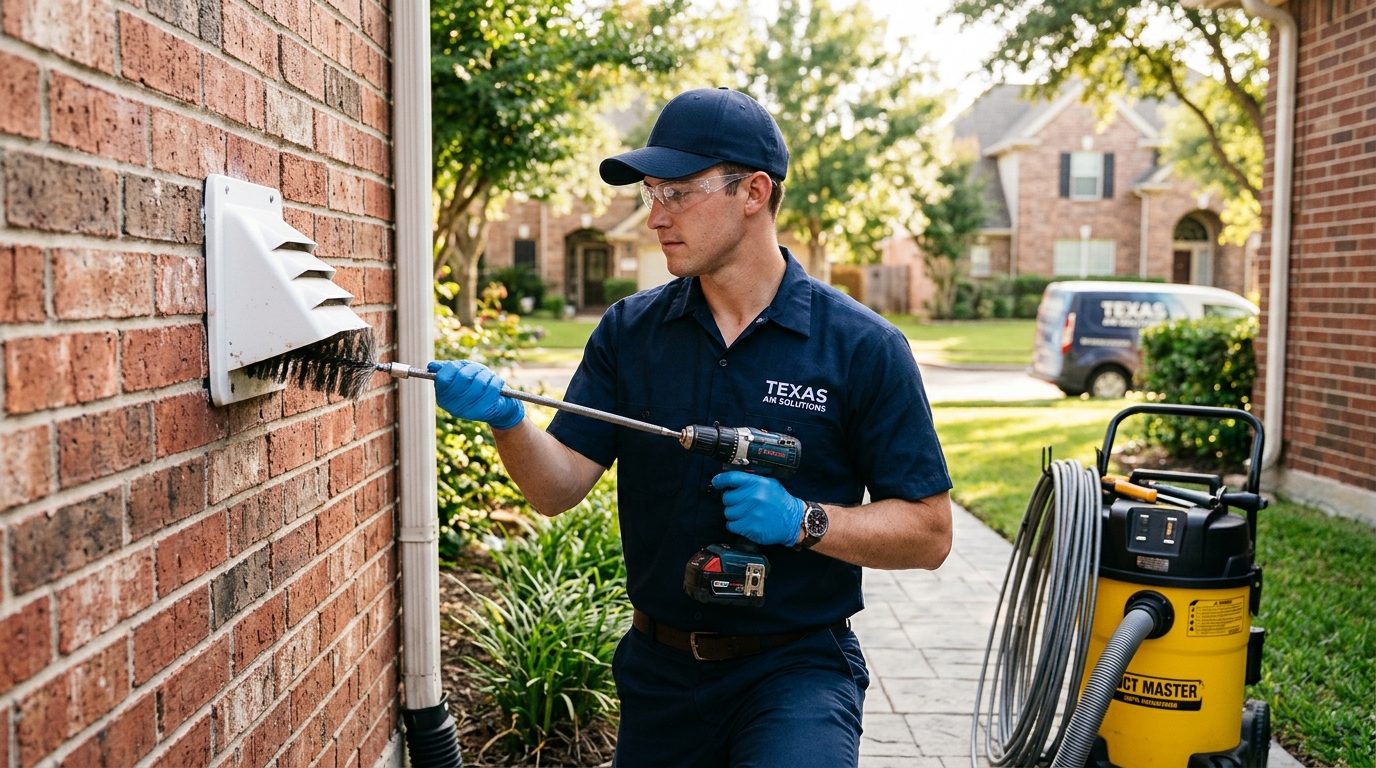
The Complexity of Vertical Roof-Terminated Dryer Runs
In many newer master-planned neighborhoods across Forney—such as Fox Hollow, Lakewood Trails, and Travis Ranch—laundry rooms are positioned in the interior center of the floorplan or upstairs near the bedrooms. As a result, the exhaust duct must route upward through the attic and terminate through the roof shingles.
These vertical lines are often 20 to 30 feet in total length. Pushing moist, heavy air straight up requires immense kinetic energy. Over time, moist fibers stick to the vertical pipe walls and rooftop flapper hoods, causing dense clogs that are impossible to reach from inside alone.
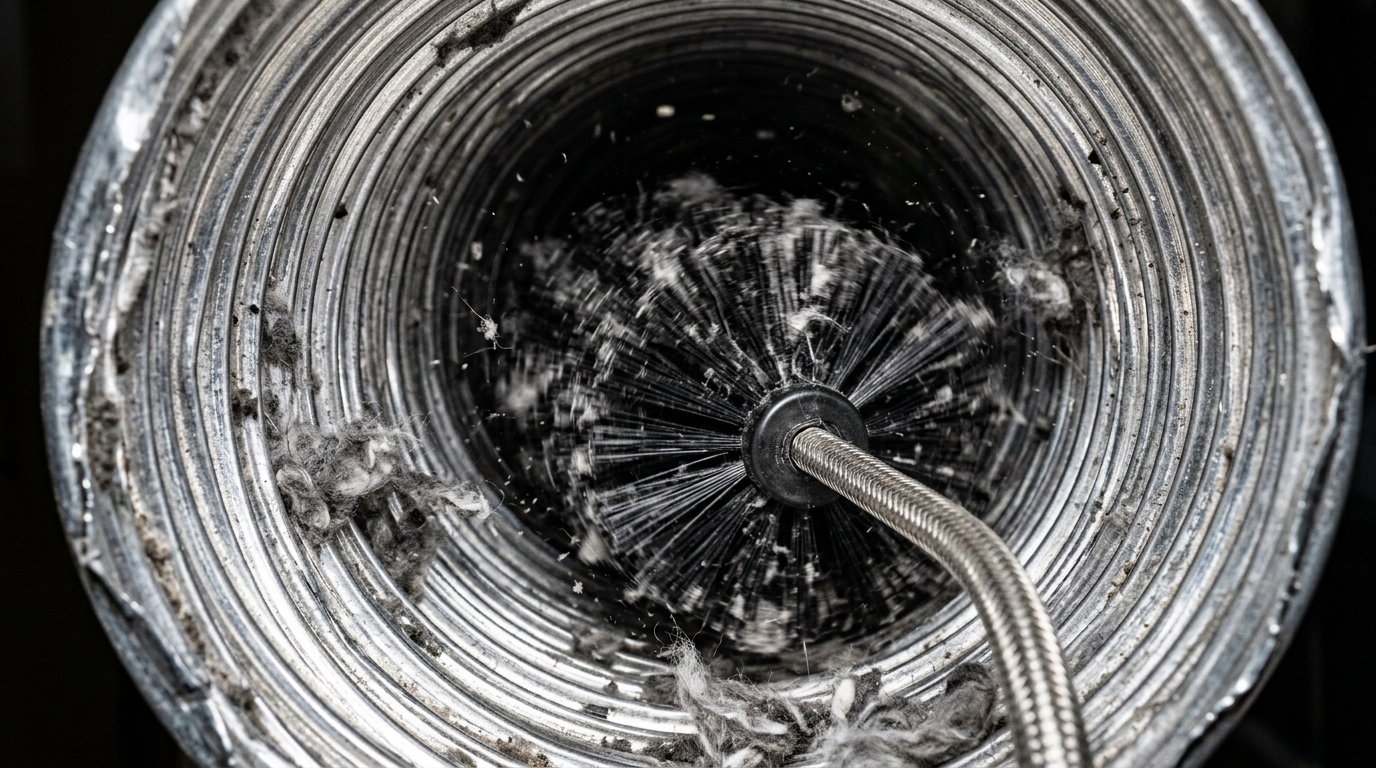
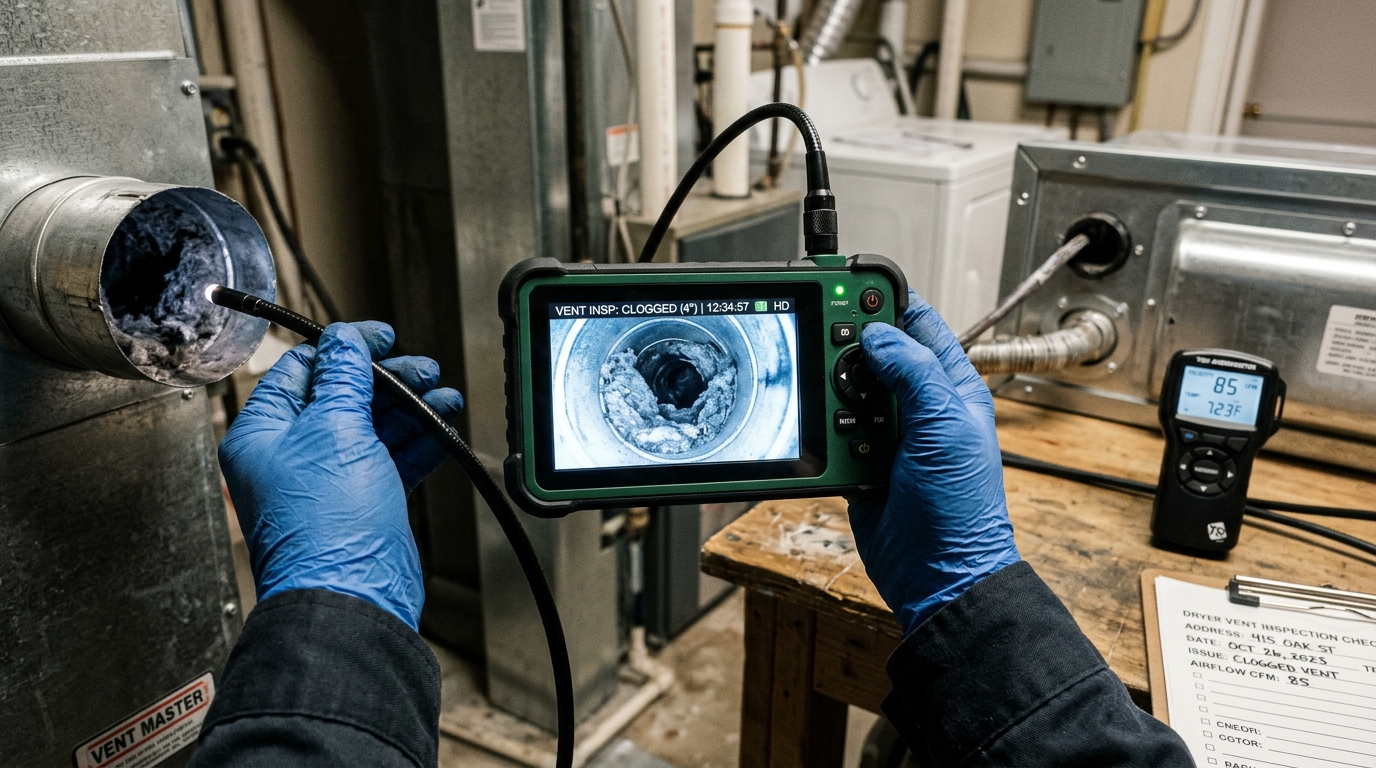
Certified Roof Access, Flashing Inspection & Cap Decontamination
Attempting to clean a roof dryer vent without professional equipment poses severe fall hazards for homeowners. Our technicians are OSHA-trained and equipped with specialized ladder stabilizers and fall-protection equipment.
We climb to the roof terminal, remove the protective hood, clean away sticky lint felt, inspect the water-tight seal of the roof flashing, and ensure the internal damper swings freely with zero gravity resistance.
Our Certified Equipment & Process Standards
Questions About Roof Dryer Vent Cleaning
Local insights, costs, and safety expectations for Kaufman County clients.
Gravity works against vertical vent runs. The dryer's internal blower fan must push heavy, moist lint 15 to 25 feet straight up. When the dryer shuts off, suspended lint drops back down, creating heavy sediment layers in the lower elbows.