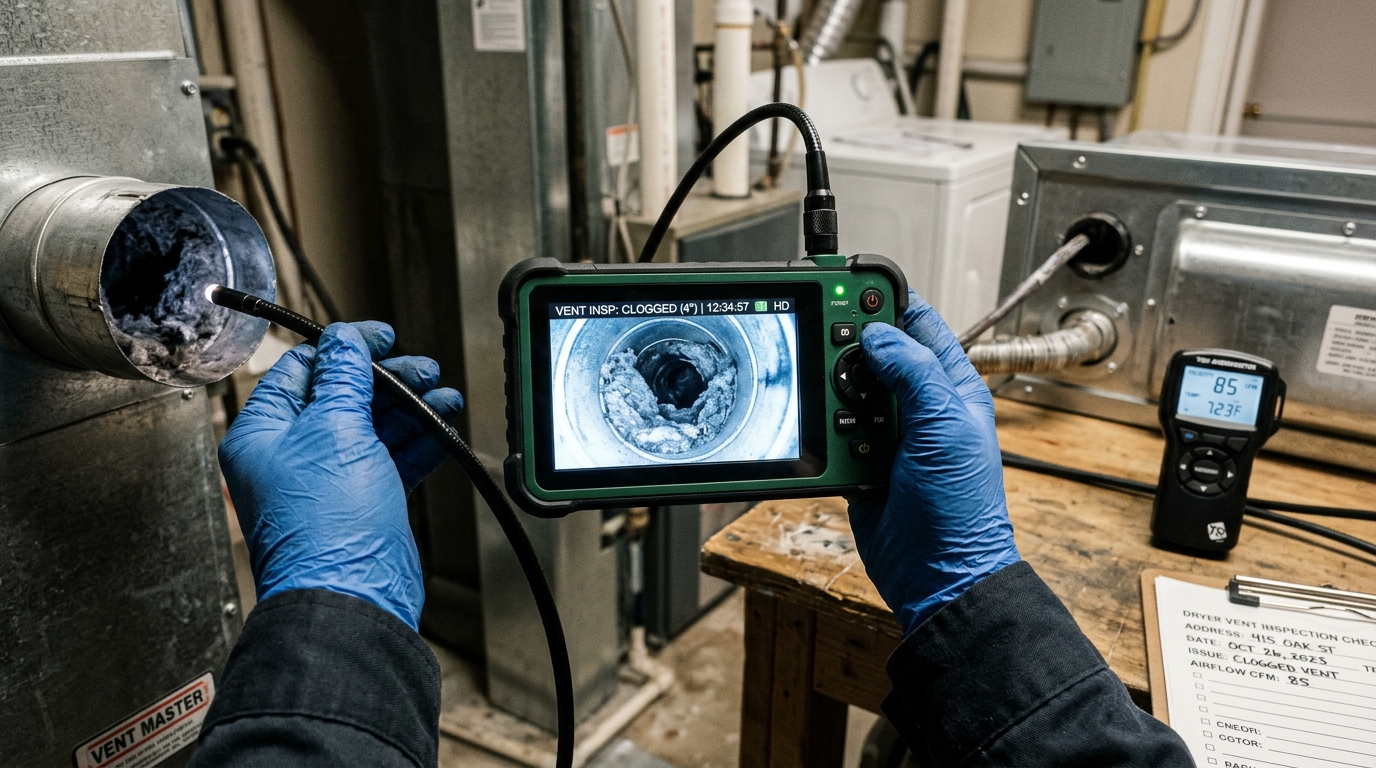
What Hidden Dangers Does a Camera Inspection Reveal?
Dryer ducts travel through inaccessible wall cavities, floor joists, and attics. Without specialized camera scopes, determining what is happening inside the sheet metal is pure guesswork.
Our color endoscopic cameras travel up to 40 feet inside the ductwork, displaying high-definition live video of internal conditions. We routinely discover disconnected seams leaking combustible lint into attic insulation, sheet metal screws catching dense lint clumps, water accumulation from poor roof pitch, and hidden rodent or bird nests.
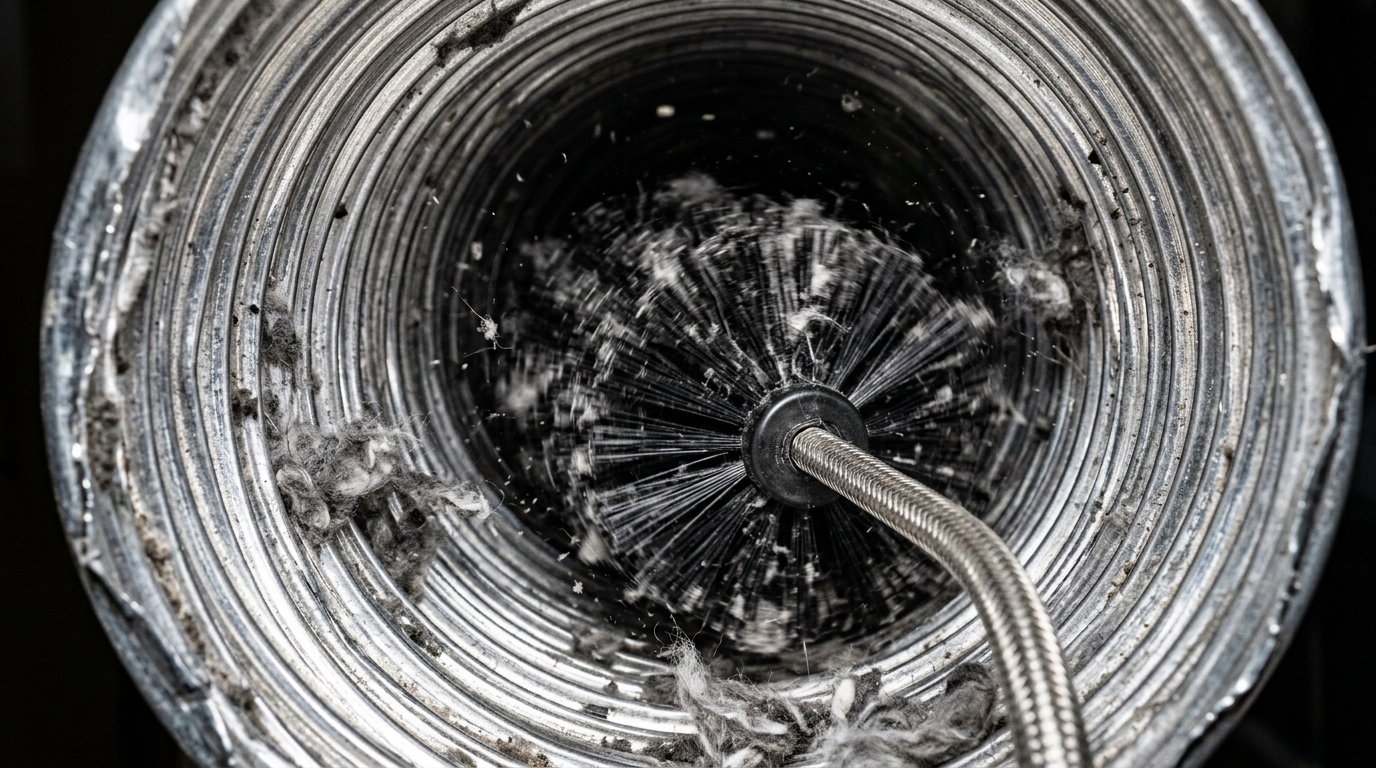
Quantitative Airflow Diagnostics with Precision Tools
Rather than guessing whether your vent has adequate draft, we measure airflow quantitatively using precision hot-wire anemometers and static pressure manometers. Manufacturers specify that dryers require healthy airflow velocity exceeding 1,200 feet per minute (FPM) at the exterior hood.
If your system registers restricted velocity or excessive static backpressure, we pinpoint the exact friction point and provide clear, transparent options for cleaning, repair, or rerouting.
Our Certified Equipment & Process Standards
Questions About Dryer Vent Inspection
Local insights, costs, and safety expectations for Kaufman County clients.
Our inspection includes a camera scan of the full duct interior, backpressure measurement, exterior vent hood evaluation, transition hose safety check, and airflow speed testing.