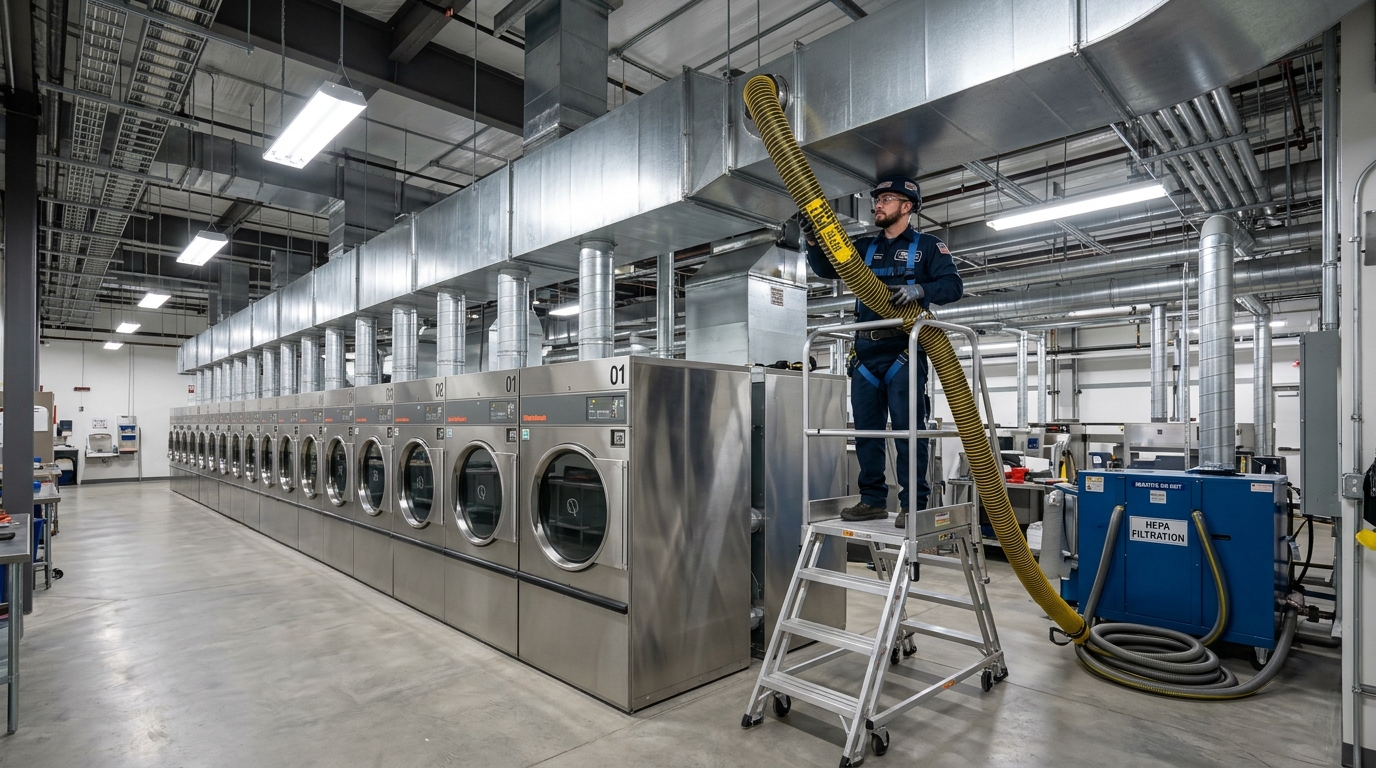
Understanding Dryer Vent Systems & Why Professional Cleaning Is Vital
A clothes dryer functions by circulating high-temperature air through wet laundry, vaporizing moisture, and exhausting that saturated air outdoors. Along with water vapor, thousands of microscopic textile fibers are dislodged from clothes with every rotation of the drum.
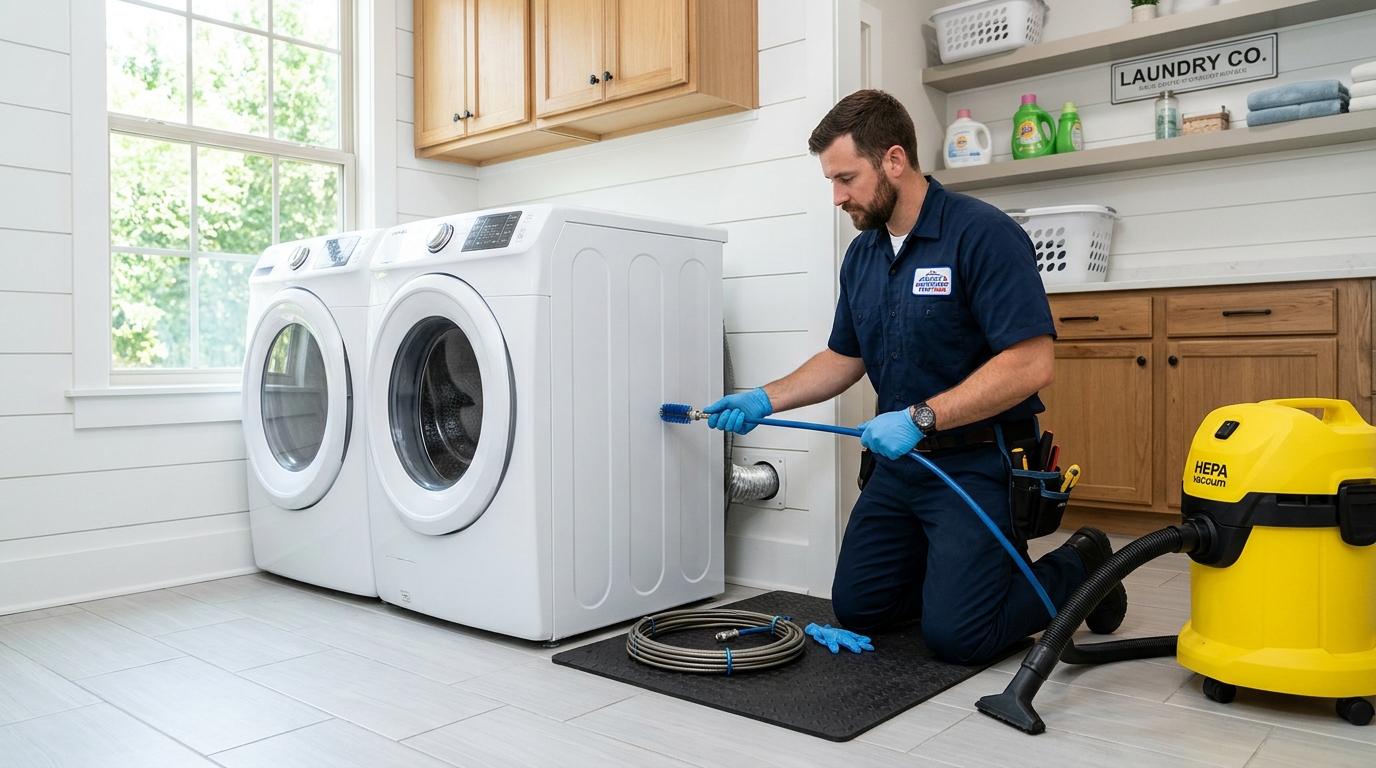
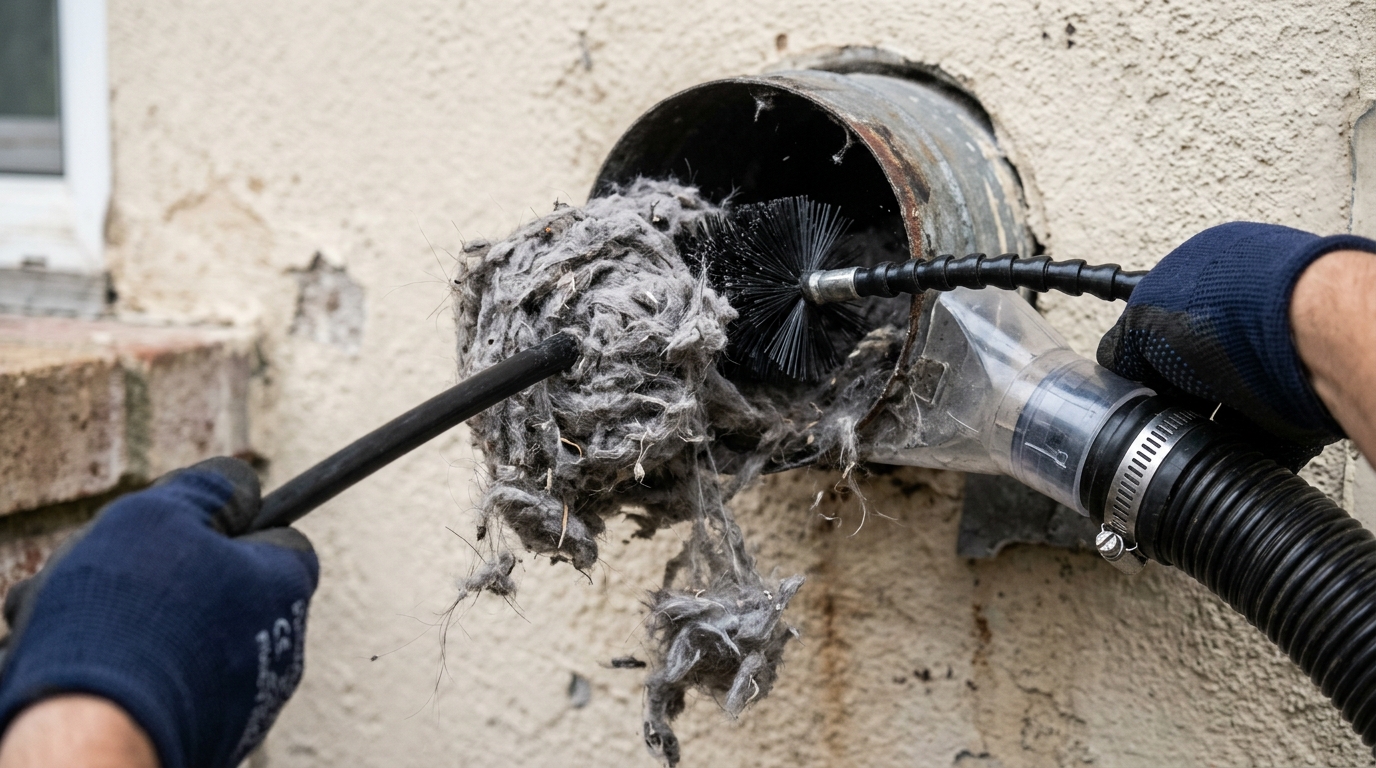
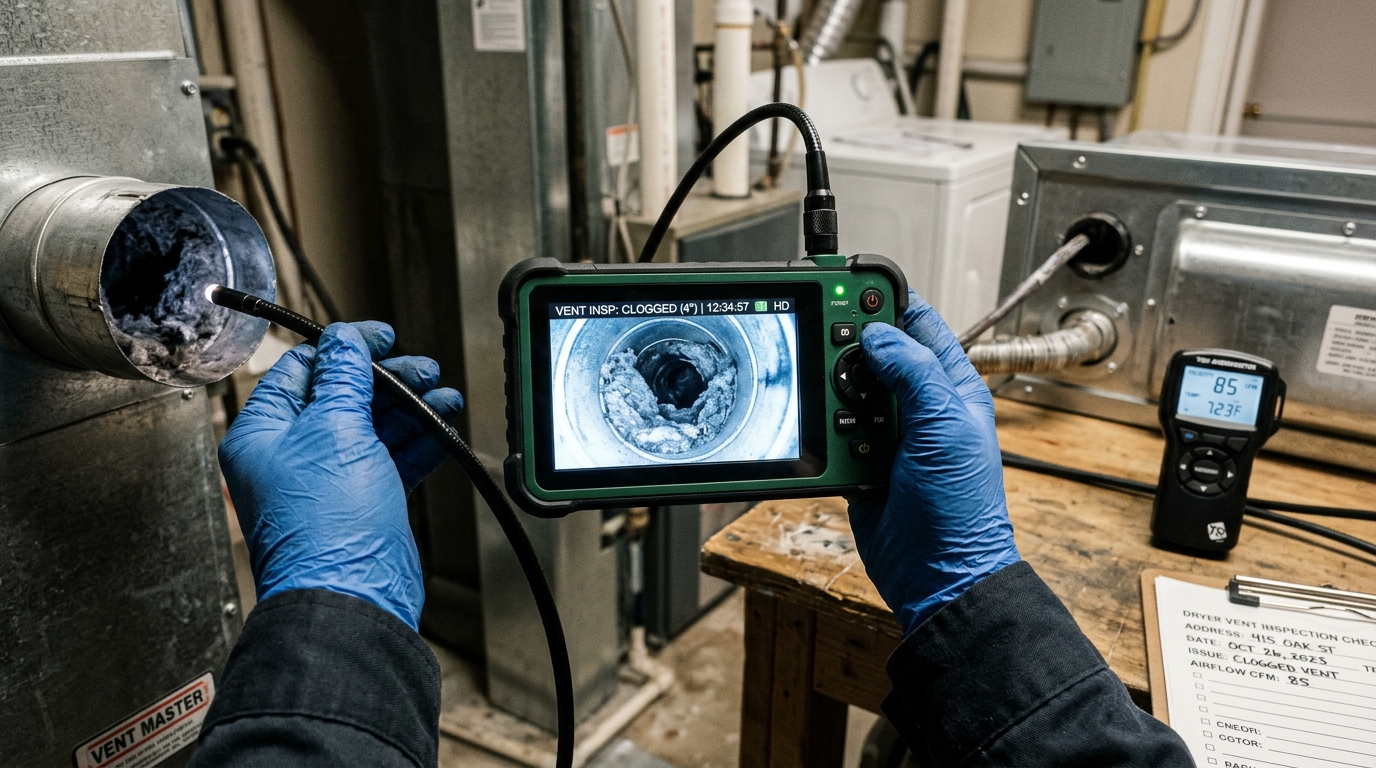
While the internal mesh filter catches approximately 60% of coarse lint, the remaining 40% escapes past the blower fan and enters the exhaust ductwork. When lint adheres to the interior walls of your duct, it acts like arterial plaque, steadily constricting the volume of air that can escape. As documented by the NFPA clothes dryer safety guidance, failure to clean dryer ducts is the leading cause of dryer fires in North America.
1. Catastrophic Fire Risk
Lint is highly combustible cellulose fiber. When restricted airflow causes appliance heating coils or gas flames to reach critical temperatures, trapped lint can ignite instantly, turning metal ducting into a blowtorch inside your walls.
2. Skyrocketing Electric Bills
A dryer with a clogged duct requires 2 to 3 cycles (120+ minutes) to dry a single load of towels. This unnecessary energy drain can add $20 to $40 every month to your Kaufman County utility statement.
3. Premature Machine Failure
Constant thermal backpressure overworks internal thermostats, snaps thermal fuses, burns out electric heating coils, and wears out motor bearings, cutting a \$1,200 appliance lifespan in half.