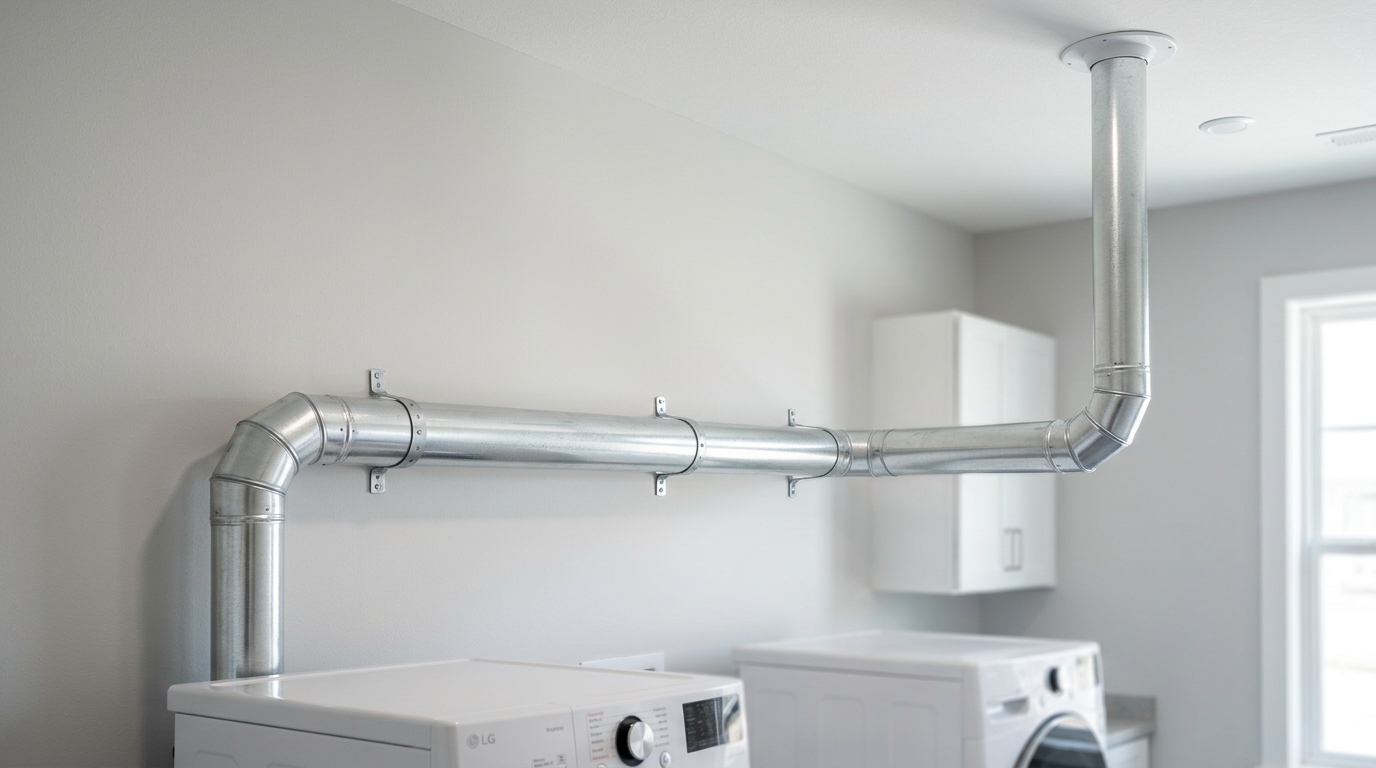
Engineering the Ideal Dryer Exhaust Pathway
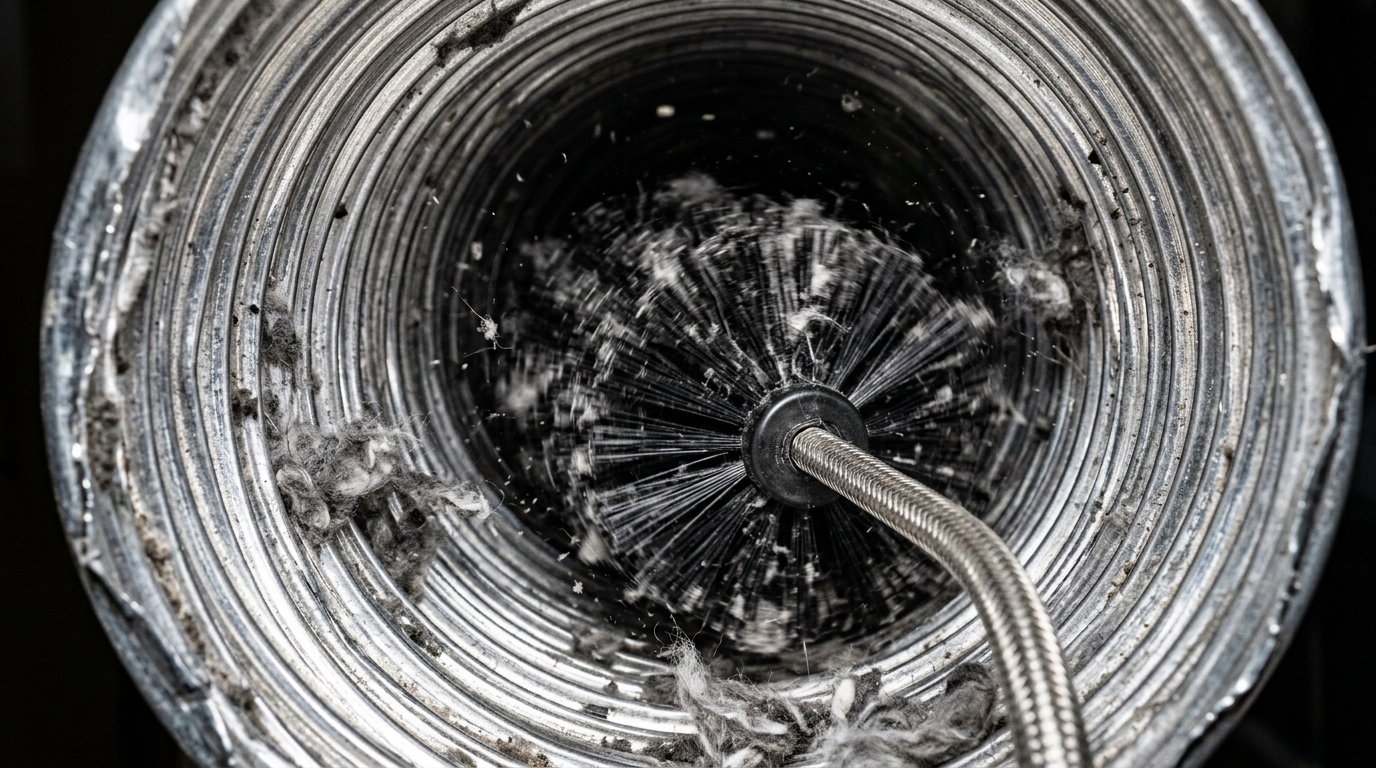
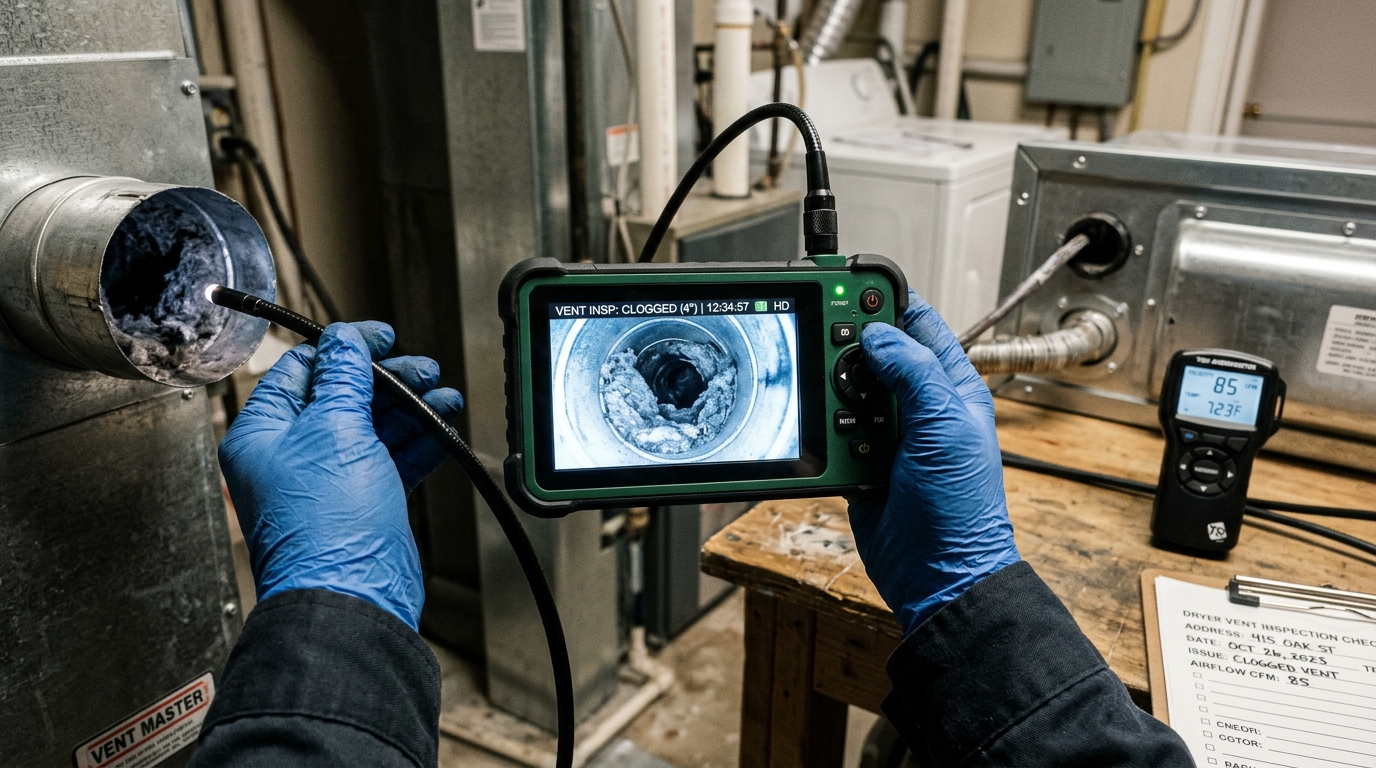
Whether you are building a custom home in Forney, finishing an expansive addition, or moving your laundry suite from an exterior wall to an interior hallway, properly designing the dryer vent run is critical. Poor routing—such as excessive dips, unnecessarily sharp bends, or long unassisted vertical climbs—creates chronic lint traps.
Our technicians map the shortest, straightest route possible to the outdoors. By minimizing static friction and backpressure, your clothes dry faster, heating coils operate at peak efficiency, and lint accumulation is dramatically slowed.
Professional Exterior Penetrations & Weatherproof Sealing
Terminating through brick veneer, fiber-cement lap siding, or Texas stone masonry requires specialized core-drilling tools. We create clean, circular wall penetrations with zero structural fracturing, mount heavy-duty exterior damper hoods with backdraft flap seals, and apply industrial-grade waterproof silicone caulking.
For roof-terminated runs, we install heavy-duty roof jacks featuring lead or galvanized metal flashing that seals seamlessly against shingle layers, preventing water leaks during intense North Texas thunderstorms.
Our Certified Equipment & Process Standards
Questions About Dryer Vent Installation
Local insights, costs, and safety expectations for Kaufman County clients.
Under the International Residential Code, a dryer vent line should not exceed 35 feet from dryer connection to exterior terminal. Each 90-degree elbow installed reduces the allowable length by 5 feet, and 45-degree elbows reduce it by 2.5 feet.