1. Cycles Taking More Than 45 Minutes to Dry Clothes
The most ubiquitous red flag of an obstructed dryer exhaust line is when standard loads require 2 or 3 cycles to dry completely. A modern clothes dryer is engineered to remove moisture efficiently within 35 to 45 minutes.
When you find yourself continually pressing the 60-minute cycle button, do not assume your dryer is wearing out. In 90% of cases, the heating element is functioning properly, but restricted airflow prevents the moisture from escaping.
2. The Dryer Cabinet and Laundry Room Feel Like a Sauna
Touch the top or side metal panel of your dryer midway through a cycle. It should feel comfortably warm, not blistering hot. If you pull away your hand because the metal is scorching, or if your laundry room is humid with condensation on windowpanes, your exhaust is trapped.
Trapped heat strains thermal limit switches, cracks electronic circuit boards, and wears down blower motor bearings, leading to expensive repair bills.
Get an Airflow Velocity Test in Forney
Same-day service available throughout Kaufman County. Zero hidden fees.
3. Burning Smell or Burning Lint Odor
Never ignore a distinct acrid or burnt-fiber smell emanating from your laundry area. Cotton and synthetic clothing fibers have a relatively low ignition temperature.
When backpressure pushes trapped lint against open heating coils or gas burner flames, fibers begin smoldering. Shut off the machine at the breaker immediately and schedule professional inspection.
4. Exterior Flapper Damper Fails to Open or Flutter
Walk outside your home while the dryer is running and look at the exterior exhaust hood. You should feel a robust jet of warm air blowing outward, and the louvers should swing wide open.
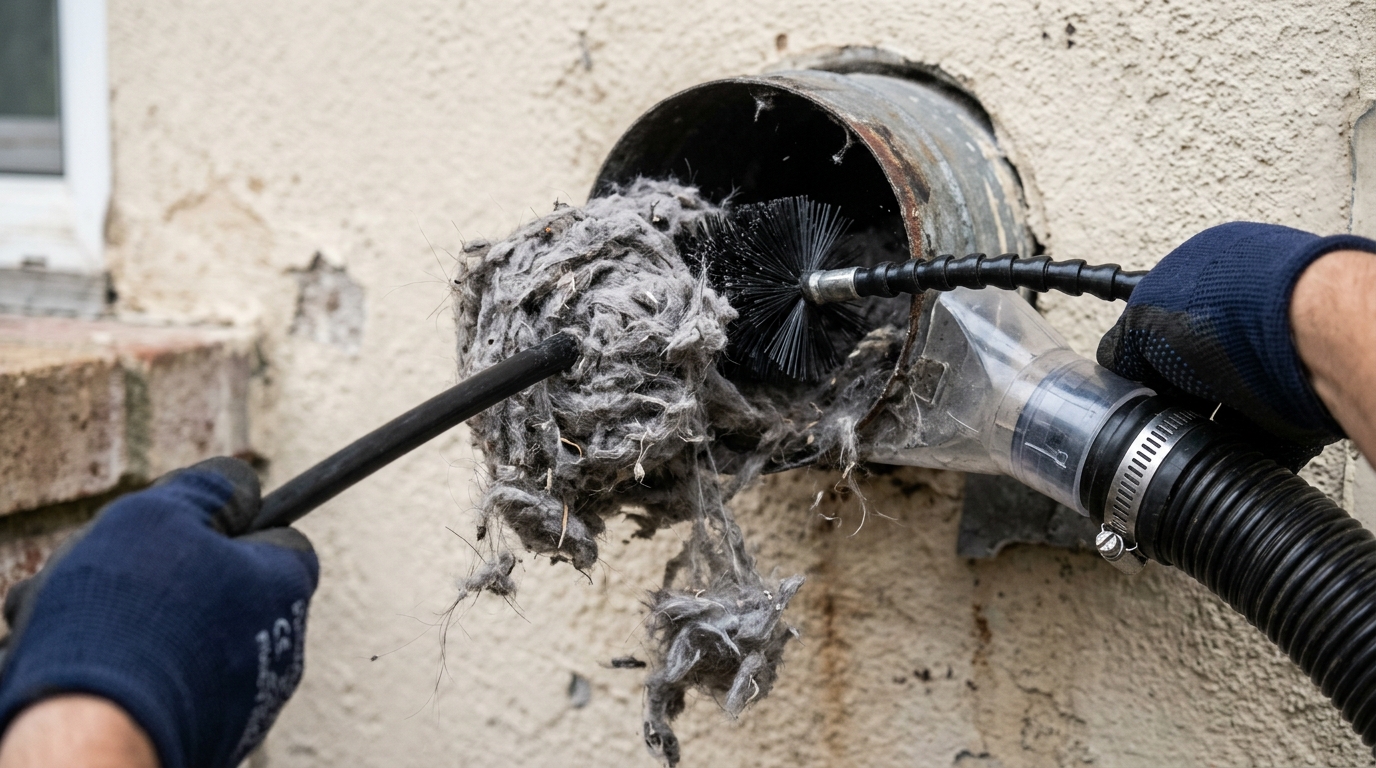
If the flap remains closed, flutters weakly, or is caked in fuzzy gray lint, your exhaust duct has lost vital positive airflow pressure.
Article FAQ
Quick answers related to this guide.
When exhaust air cannot escape, scorching heat builds up inside the metal appliance chassis. This indicates severe duct blockage and imminent fire hazard.